

Hi everyone. First off, many thanks to those who are here for the very first issue. This has been a long time coming, and I am excited to finally get to publish the first Sarungano.
What more, it is an honour to open this series with someone who’s work has inspired me. She will probably be reading this before I have had the chance to tell her myself: coming across her work last year, then reading her book this year, pushed me to keep working on an idea I had carried for a very long time.
When I got in touch to share my ideas and interview her for this piece, I had many doubts but her response and words of encouragement was all I needed. And so here we are!
Joyce Jenje-Makwenda is an archivist, historian, ethnomusicologist, and writer. She founded and runs the Joyce Jenje Makwenda Collection Archive, one of the largest private archives in Zimbabwe, holding recorded interviews, newspapers, vinyl records, photographs, and musical instruments.
Over four decades her research has covered early urban culture, music, and the histories of women in Zimbabwe. Her published works include Zimbabwe Township Music (2005), Divorce Token (2009), and Women Musicians of Zimbabwe (2013).
Joyce’s story begins in Mbare, will always be about Mbare and connects anyone who has ever enjoyed a piece of Zimbabwe’s music culture to Mbare.
Joyce Jenje-Makwenda: The Story of Mbare

Mbare (The cradle of Township Music), 1958. Photo from Zimbabwe Township Music by Joyce Jenje-Makwenda. Courtesy of the Joyce Jenje Collection Archives.
“Three Jimmies”
Joyce Jenje’s paternal grandparents walked from Chishawasha to Mbare in 1931 and became some of the township’s first residents. She grew up a third generation Mbare urbanite in a household where the musical lines were drawn before she could walk.
“In my family there were three Jimmies. Jimmy Smith for my father, jazz. Jim Reeves for my mother, gospel music. And Jimi Hendrix for me and my brother, hard rock.”
Her father David Jenje sat by the front gate most days, playing jazz records and drinking his beer. When Joyce came to ask for bioscope money, dressed in a mini skirt, platform shoes, and a big afro, he would talk about how his generation dressed in suits to watch music at Mai Musodzi Hall, sitting for hours, just listening.
“So you did not dance? With our music we dance,” she would say. He talked about sophistication. She defended rock.

Mai Musodzi (standing) giving instructions to Red Cross Workers. Photo from Zimbabwe Township Music by Joyce Jenje-Makwenda. Courtesy of the Joyce Jenje Collection Archives.
When hard rock played in the house, David worried. “My mother would say these children need a beating with this music of theirs,” Joyce recalls. “Then my father would say, no, these two are okay. You must go kumba kuNational and see what my young brother does when he is listening to this music. He cries. Real crying. So these two just leave them alone.”
Joyce did not know, sitting at that gate, that her father was delivering a curriculum. Years later she would design and teach the History of Popular Music and Jazz at the Zimbabwe College of Music, and understand what had been planted during those talks by the gate.
“It was a calling”
Joyce began researching township music in 1984, while expecting her fourth child. Her father was her first source. Her mother, one of Zimbabwe’s earliest female print journalists, pointed her to the National Archives, which became her second home.
She had no institutional affiliation and no funding. Her fashion design business was doing well, but the research consumed her time, and clients noticed. She closed the business and started making samosas to fund the work instead.
“I would make the dough by midnight and at 4am fry the samosas, and they would be sold from around 6am. This money I would use for transport to go and interview musicians and also to the National Archives.”
She slept three hours a night while raising four children and completing a journalism correspondence course alongside the research. “I did not belong to any institution. It was a calling. The calling was very strong. I could not ignore it.”
An invitation to speak at a conference in Sweden changed her trajectory. When the organisers asked how she funded her research, she told them about the samosas.
They gave her contacts at the Norwegian, Swedish, and Danish embassies. NORAD funded the completion of the research, the production of the documentary Zimbabwe Township Music, and the first draft of the book. The documentary aired on ZBC on 26 December 1992.
Before the documentary, Joyce had already been building an audience. Godwin Mbofana, then head of ZBC Radio 2, had asked her to produce a programme in Shona and Ndebele featuring the early musicians. “The programme had an amazing following.”
“The Mattaka house in 4th Avenue”
Kenneth Mattaka formed the Bantu Actors in Mbare in 1932. Decades later, his grandchildren brought instruments dating to the 1930s to Joyce’s archive.
“When they brought them to the JJMCA, it was so touching. I did not have anywhere to put them, so I had to build a makeshift room.”
She dedicated the room to the Mattaka family and to township jazz.

Kenneth Mattaka, pioneer of Township Music and founder of The Bantu Actors in 1932, widely credited as the first professionally organized musical and theatrical group in Zimbabwe. Photo from Zimbabwe Township Music by Joyce Jenje-Makwenda. Courtesy of the Joyce Jenje Collection Archives.
The Mattaka house at 4th Avenue in Mbare worked as an informal cultural centre. “Musicians used to hang around the house, and they learnt a lot from Kenneth and Lina Mattaka and their children Bertha Mattaka Msora and Edison Mattaka, who was an amazing instrumentalist.”
Thomas Mapfumo, Safirio Madzikatire, Susan Chenjerai, and Louis Mhlanga all came through that house. She credits the family with “the beginning of Zimbabwe’s popular music and music business.”
No museum or university received those instruments. A family entrusted them to her instead.
“The beauty of art”
Joyce’s research on women musicians reaches back to pasichigare, the pre-colonial era. Women used song to speak freely then, to communicate, to air grievances, to choose who they loved.
“That is the beauty of art. It gave women a safe space.”

Photo from Zimbabwe Township Music by Joyce Jenje-Makwenda. Courtesy of the Joyce Jenje Collection Archives.
That freedom continued into the twentieth century, even when colonial-era codes made it look like transgression. Dorothy Masuka sang about her money running out at a shebeen, a place women were not supposed to enter.
Susan Mapfumo, whom Joyce calls “a feminist in the ’70s before people talked about feminism,” recorded a song wives played when their husbands came home with only half their pay.
One of Susan Mapfumo’s songs, “Ndakanga Ndakaroorwa kwaMrewa,” is about divorce, performed at a high tempo. Joyce remembers playing it for students at the University of the Witwatersrand.
“When I played this song to Wits students, they wondered how a song talking about divorce could have such a high tempo, as if she was celebrating. But yes, Susan was celebrating.”
Joyce sees no real line between the women who sang and the women who led.
“They were leaders in their own way and their own right,” she says. “Today’s women are the ones who are not allowed to lead. But pre-colonial, we had the likes of Mbuya Nehanda, Lozikeyi, and more. In Africa we had women as queens. Queen Mojaji came from the Monomotapa Kingdom and established her queendom of the Bolobedi in South Africa.
We also had Queen Nzinga in Angola, who fought the Portuguese. It’s only after colonialism that women have had problems to lead, as the space, I think, has become too public.”
“Fresh angles”
Joyce’s archive still holds footage that could be edited into thirty documentaries or more, recordings gathered over four decades. They sit in the three-bedroom cottage at the back of her main house.
She does not want to finish that work alone. “I would like to work with the younger generation to edit these documentaries, so that they can learn while we are editing and I can also take their fresh angles. This is another way of teaching without forcing the younger generation into understanding their history and culture.”
She has one piece of advice for anyone who wants to start where she did, at a gate, with a parent talking about music no one else was writing down.
“We need to tell our children stories even if they are showing not to be interested, because the stories about township music that my father told me were kept in a hard drive in my head, and one day they popped up.”
Sonic Vault: Skokiaan

Photo from Zimbabwe Township Music by Joyce Jenje-Makwenda. Courtesy of the Joyce Jenje Collection Archives.
Joyce Jenje-Makwenda’s Zimbabwe Township Music documents an era she calls “essentially the Zimbabwean interpretation of jazz.” If one recording stands as that era’s loudest artifact, it is Skokiaan.
Ethnomusicologists widely cite its composer, August Musarurwa, as a pioneer who proved that indigenous African rhythms, specifically tsaba-tsaba and marabi, could successfully integrate with Western big-band jazz to create a globally appealing sound.
Skokiaan is an instrumental tsaba-tsaba tune first carried by Musarurwa's own band at the Cold Storage Commission in Bulawayo before Gallo released it internationally in 1954.

August Musarurwa. Photo from Zimbabwe Township Music by Joyce Jenje-Makwenda. Courtesy of the Joyce Jenje Collection Archives.
Skokiaan was Southern African slang for illicit home-brewed liquor, adapted into Shona as Chikokiyana. Musarurwa, who had served in the police before he led the band, said it was the tune played in shebeens to warn drinkers a raid was coming.
The original recording reached number 17 on the US charts. Ultimately, Musarurwa's music transcended borders to inspire over 80 international covers by global artists across diverse genres.
Within a short time, it was recorded by Ralph Marterie (whose version reached number 3, his highest US placing ever), The Four Lads, Perez Prado, Bill Haley & His Comets, Eartha Kitt, and Herb Alpert with Hugh Masekela.
Jazz icon Louis Armstrong was so captivated by the melody that he recorded his own version and personally traveled to Zimbabwe in 1960 to meet Musarurwa. Few African compositions have been recorded this many times by this many legendary names.
Literary Note: Zimbabwe Township Music

Joyce Jenje-Makwenda’s Zimbabwe Township Music traces the growth of Zimbabwe’s urban music scene from the 1930s through the post-independence years.
The book follows how migrants into townships like Mbare and Bulawayo’s Makokoba fused rural musical roots with Western styles into genres such as kwela, tsaba-tsaba, and afro-jazz, carried by groups and musicians including the Bantu Actors under Kenneth and Lina Mattaka, the City Quads, the Cool Crooners, Dorothy Masuka, Safirio Madzikatira and August Musarurwa.
That music became both a marker of identity and a form of resistance under colonial rule.

The first LP by an African Band the City Quads produced by Polydor in 1961 entitled; Music In The African Townships. Photo from Zimbabwe Township Music by Joyce Jenje-Makwenda. Courtesy of the Joyce Jenje Collection Archives.
Tracks of the Week
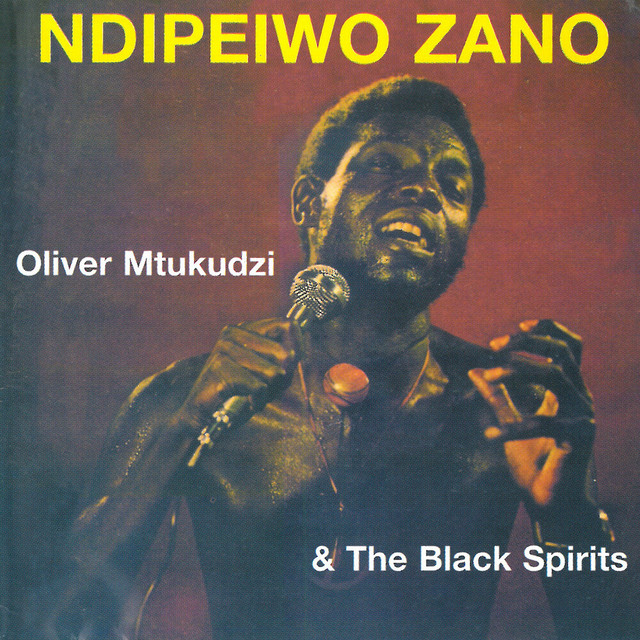
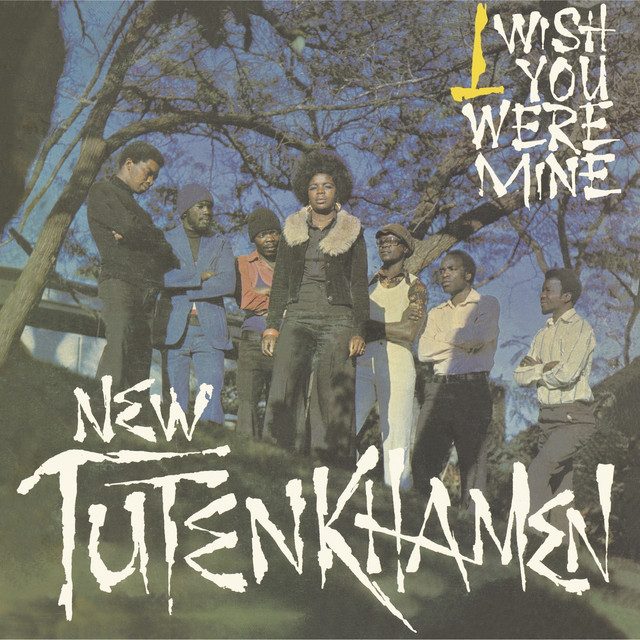
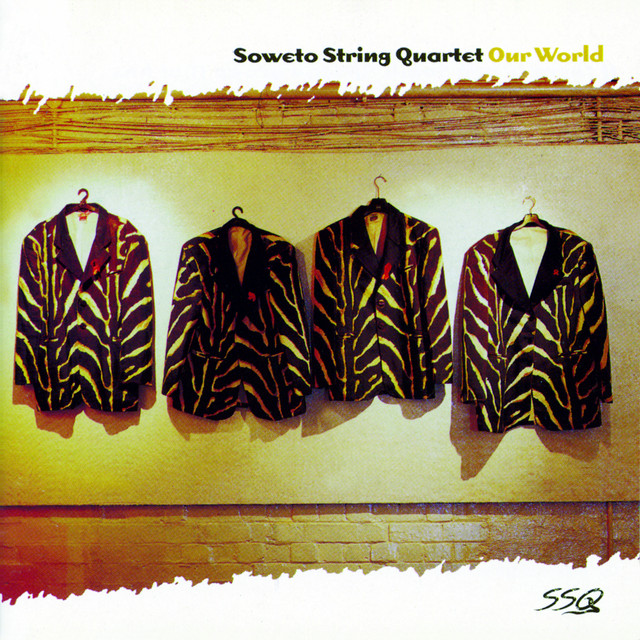
Tune in to some soulful music from the motherland on a Sunday. Here are my picks for this week - each selected from the full Timeless Dzimbahwe playlist.
🎁 Share with friends, receive gifts.
Know a friend who would enjoy Sarungano on a Sunday? Please share with them.
Here’s what you get:
1 referral: Mitupo: A Quick Guide to Shona Totems and Their Meanings
3 referrals: ChiShona: A Diaspora Parent’s Plan
5 referrals: Access to the Future Dzimbahwe Playlist: A curation of hidden gems from a new generation who I view as torchbearers of Zimbabwe’s musical heritage going into the future
Thank you for sharing and happy Sunday!
Tatenda